
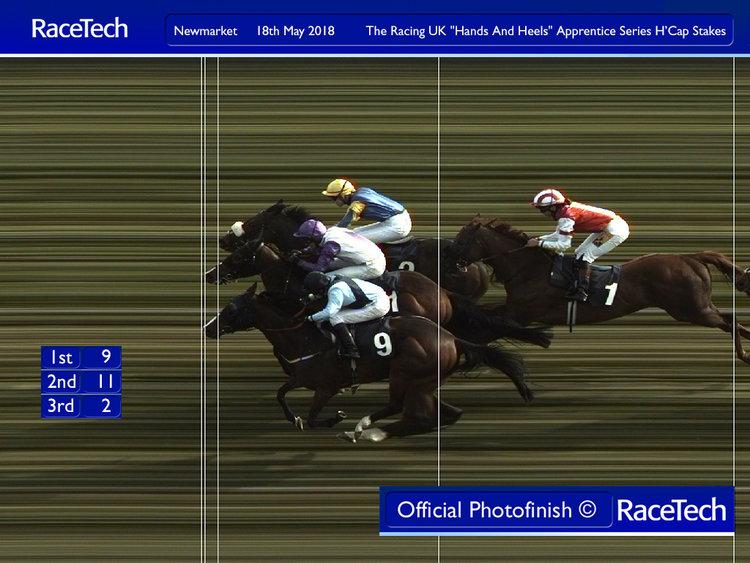
If you bet on horse racing long enough, you’ll experience the same pattern over and over again.
Short heads.
Photo finishes.
Second places at decent odds.
Fourth when you needed third.
After a while it starts to feel like bad luck is following you around.
But here’s the uncomfortable truth:
In horse racing, what most people call “bad luck” is usually just variance.
And misunderstanding variance is one of the main reasons people lose confidence in perfectly sound betting decisions.
Variance is simply the natural swing in outcomes that happens when probability meets reality.
You can make the right decision and still lose.
You can make the wrong decision and still win.
In racing, variance is amplified because:
A horse beaten a short head and a horse beaten ten lengths both count as losers — even though they tell very different stories.
Psychologically, finishing second or fourth hurts more than finishing last.
That’s because:
A 10-length loser is easy to dismiss.
A short-head defeat sticks in your mind.
The problem is that your brain starts doing this:
“If only that went my way…”
“I must be due a bit of luck…”
“This keeps happening to me…”
That’s variance playing tricks on your perception.
Horse racing is uniquely cruel when it comes to variance.
Think about it:
Over jumps, it’s even worse:
The margins are so fine that clusters of near-misses are inevitable, even when you’re doing things right.
This is where most bettors go wrong.
They judge bets by:
Instead of:
A horse finishing second at 8/1 after travelling strongly and hitting the front late is not a “bad bet”.
A horse finishing fourth after being forced wide and staying on strongly is not a “bad bet”.
Those outcomes tell you:
The result just landed on the wrong side of variance.
Even highly skilled bettors experience:
That’s not failure — that’s how probability works.
Skill shows up:
This is why judging performance over short periods is pointless.
It’s also why short-term records are so misleading.
This is where variance links directly to performance measurement.
Short-term results are noisy.
Long-term metrics are stable.
That’s why measures like return on investment (ROI) are far more meaningful than:
If you don’t already understand why ROI is the only sensible way to judge betting performance, it’s worth reading this:
Understanding ROI in horse racing – the real measure of a tipster
ROI smooths out variance.
It tells you whether your decisions are profitable despite short-term swings.
If you want to stay sane — and accurate — stop obsessing over:
And start tracking:
This shifts your focus from outcomes you can’t control to process you can.
Variance isn’t something to beat.
It isn’t something to “get through”.
And it isn’t a sign you’re doing things wrong.
It’s the entry fee for betting in probabilistic markets.
If you accept that:
You stop chasing ghosts and start judging yourself properly.
Variance isn’t bad luck — it’s proof you’re playing a game where skill takes time to show itself.
The next big priced winnner is only ever just round the corner.
Thank you for signing up!
Oops! Something went wrong. Please try again later.